Simplifying data accuracy
Product research and strategy to streamline data resolution and compliance processes
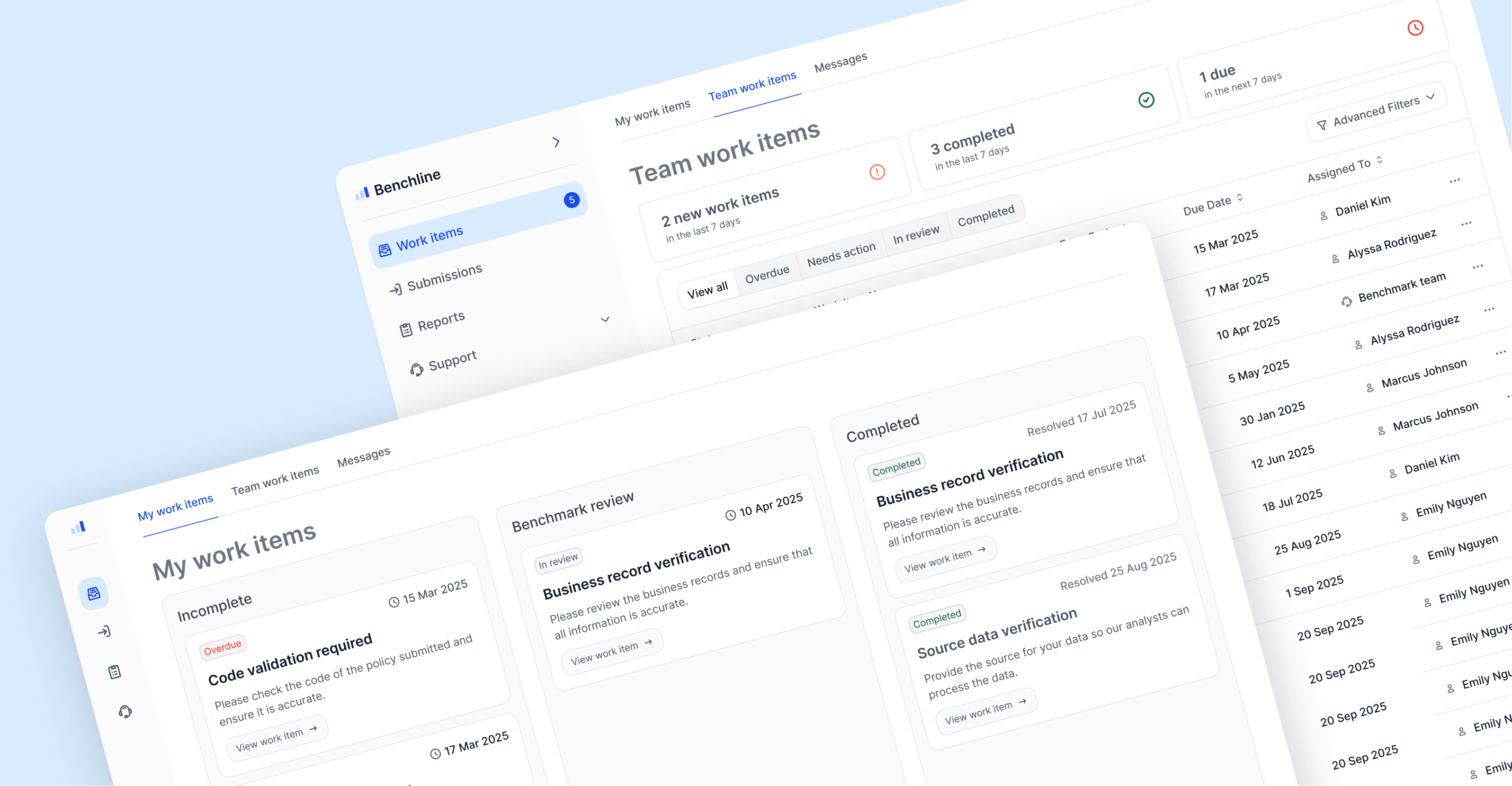
Overview
I led a product discovery to rebuild a legacy task management system used by a regulatory data organization* serving the insurance industry. Leadership wanted to improve the tool but were wary of disrupting a system relied on by many users or committing to an expensive rebuild that might miss the mark.
My role was initially to recommend features and design direction, but I advocated for the team to think in terms of product strategy in order to help leadership navigate the tradeoff between incremental improvements and a full rebuild in a structured way.
My team was made up of two business analysts and 2 director-level stakeholders.
I led a product discovery to rebuild a legacy task management system used by a regulatory data organization* serving the insurance industry. Leadership wanted to improve the tool but were wary of disrupting a system relied on by many users or committing to an expensive rebuild that might miss the mark.
My role was initially to recommend features and design direction, but I advocated for the team to think in terms of product strategy in order to help leadership navigate the tradeoff between incremental improvements and a full rebuild in a structured way.
My team was made up of two business analysts and 2 director-level stakeholders.
*For confidentiality reasons, I’ll refer to the organization as Benchline in this case study.
INDUSTRY
Insurance
ROLE
Design strategist
SKILLS
Research / strategy
YEAR
August, 2022

Challenge
Benchline relies on accurate data submissions from insurance companies to publish industry benchmarks. Their Task Management System (TMS) flags issues in data submissions and creates work items that move between external data reporters and internal analysts, with external supervisors occasionally monitoring progress. This process was essential for ensuring data accuracy.
While the legacy TMS was technically functional, there were clear signs of dissatisfaction within Benchline. The support team received a high volume of calls from confused data reporters, and it was no secret that the internal analysts were frustrated with the tool.
Benchline relies on accurate data submissions from insurance companies to publish industry benchmarks. Their Task Management System (TMS) flags issues in data submissions and creates work items that move between external data reporters and internal analysts, with external supervisors occasionally monitoring progress. This process was essential for ensuring data accuracy.
While the legacy TMS was technically functional, there were clear signs of dissatisfaction within Benchline. The support team received a high volume of calls from confused data reporters, and it was no secret that the internal analysts were frustrated with the tool.
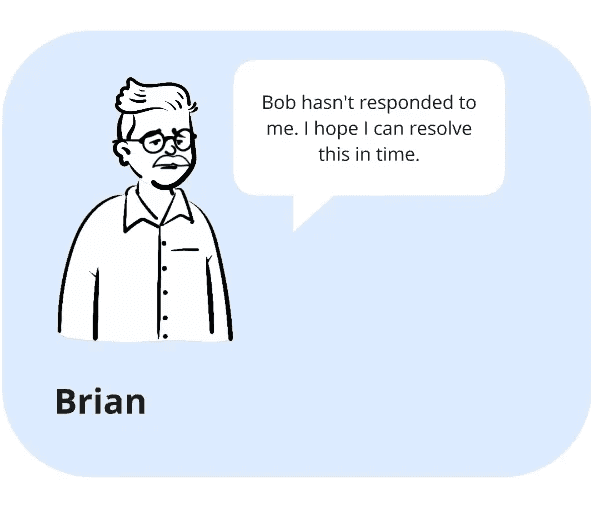
External Data Reporter
As a data reporter, I want to resolve work items quickly and fix data. I have to reach out to different people for some errors.
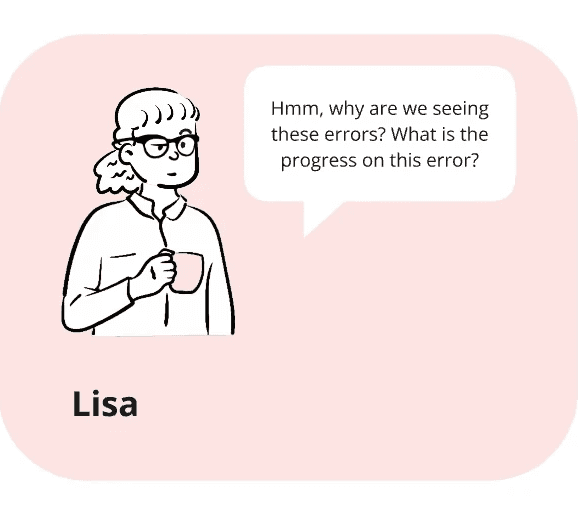
External Data Supervisor
As a data supervisor, I want an overview of my team's progress and make sure errors are resolved on time to avoid fines.
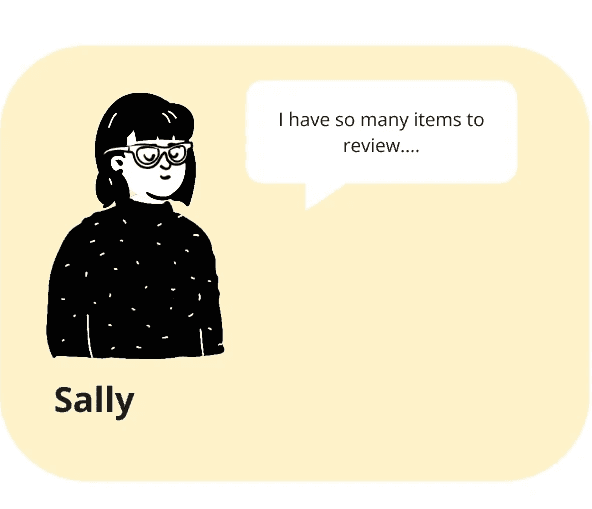
Internal Analyst
As a internal analyst, I want to review work items and respond to customers quickly.
Research plan
I created a research plan to explore and understand the points of friction across the existing system to help shape the next iteration of the tool. I advocated to conduct research with both internal and external users because I knew their dynamic and relationship would be essential to understanding points of friction.
I created a research plan to explore and understand the points of friction across the existing system to help shape the next iteration of the tool. I advocated to conduct research with both internal and external users because I knew their dynamic and relationship would be essential to understanding points of friction.
RESEARCH GOAL
Identify obstacles across key personas and understand the communication dynamics between internal and external users.
We were able to conduct individual interviews with external data reporters and data supervisors, but due to the holidays and internal deadlines, we realized we had limited time with internal analysts. To maximize what time we had, I facilitated a focus group with internal analysts that anchored the session on reacting to the external users’ journey map and connecting dots to the internal process.
This quickly identified areas of misalignment and led to insightful discussions with the internal analysts on the gaps between internal and external users. Reviewing a combined customer–analyst journey map helped the team build empathy and align on where breakdowns were occurring.
Methods
Interviews with external data reporters and data supervisors
Focus group workshop with internal analysts to pressure-test assumptions and close gaps
Journey map to synthesize insights across all the users
We were able to conduct individual interviews with external data reporters and data supervisors, but due to the holidays and internal deadlines, we realized we had limited time with internal analysts. To maximize what time we had, I facilitated a focus group with internal analysts that anchored the session on reacting to the external users’ journey map and connecting dots to the internal process.
This quickly identified areas of misalignment and led to insightful discussions with the internal analysts on the gaps between internal and external users. Reviewing a combined customer–analyst journey map helped the team build empathy and align on where breakdowns were occurring.
Methods
Interviews with external data reporters and data supervisors
Focus group workshop with internal analysts to pressure-test assumptions and close gaps
Journey map to synthesize insights across all the users
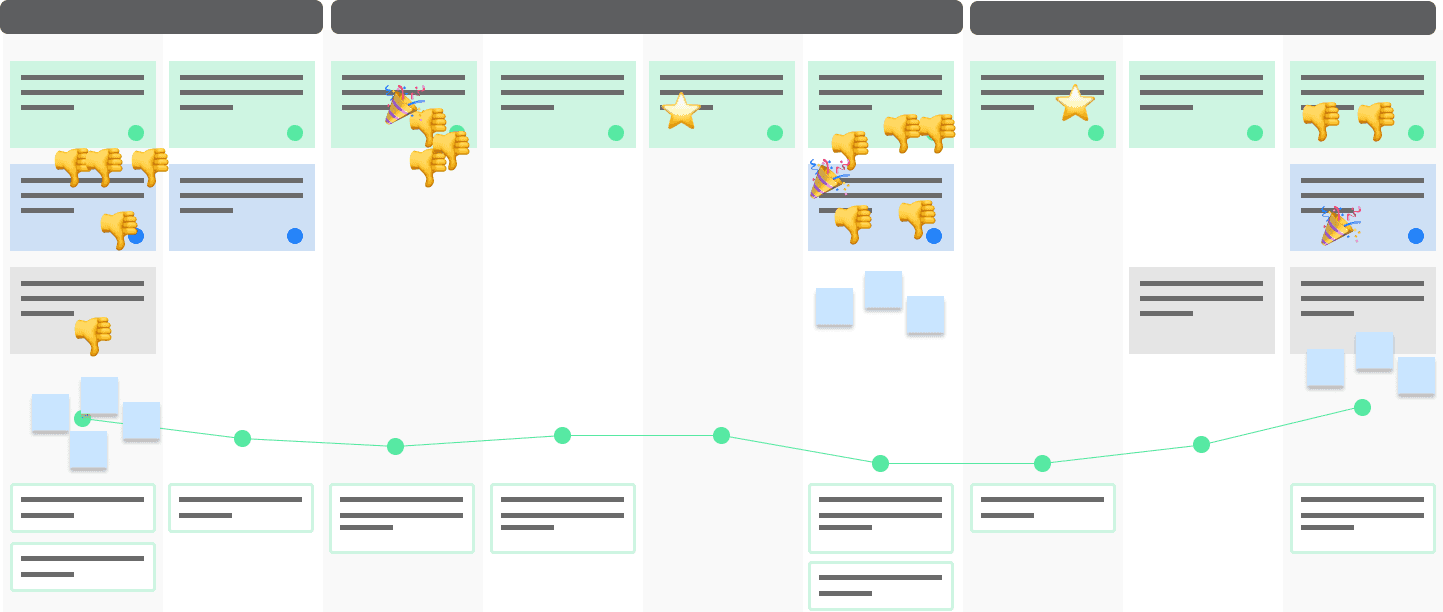
Journey map has been redacted for confidentiality reasons.
Journey map has been redacted for confidentiality reasons.
Insights
The journey map revealed a critical insight: the core problem wasn’t just UI or features. It was a breakdown in communication and clarity.
When the users were actively resolving issues, they couldn’t tell what was needed next or who was responsible. The lack of clarity led to off-system communication and stalled progress, building anxiety across the different users.
The journey map revealed a critical insight: the core problem wasn’t just UI or features. It was a breakdown in communication and clarity.
When the users were actively resolving issues, they couldn’t tell what was needed next or who was responsible. The lack of clarity led to off-system communication and stalled progress, building anxiety across the different users.
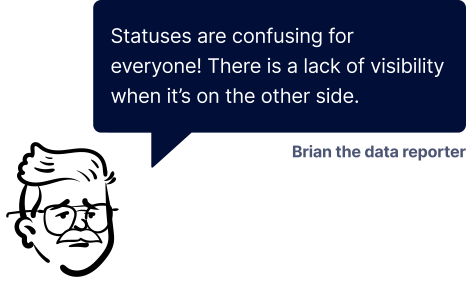
Progress was unclear.
External users struggled to interpret work item statuses or next steps.
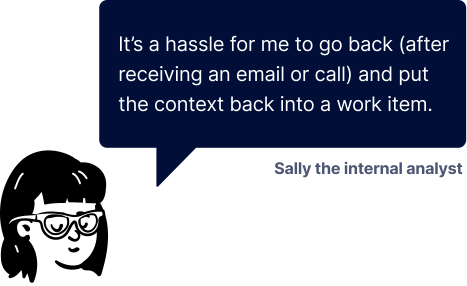
Ambiguous statuses created noise.
Ambiguous statuses created noise.
This drove external users to contact internal analysts outside the system, creating more work for analysts.
This drove external users to contact internal analysts outside the system, creating more work for analysts.
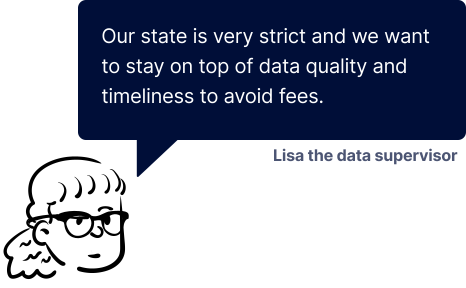
This led to added friction.
This led to added friction.
Internal analysts struggled to respond quickly while external users grew anxious about deadlines.
Internal analysts struggled to respond quickly while external users grew anxious about deadlines.
Based on these insights, we were able to craft a problem statement:
Based on these insights, we were able to craft a problem statement:
PROBLEM STATEMENT
How might we provide clear indications of progress so all involved parties can stay aligned and self-monitor without relying on off-system communication?
From research to strategy
There were multiple ways to address the communication challenges. We could have rebuilt the task management system from scratch, reorganizing all information to maximize clarity and streamline communication. However, I wanted to ensure our strategy was grounded in value while balancing impact and feasibility.
I synthesized the research insights and created a central problem statement for the team to focus their brainstorming.
There were multiple ways to address the communication challenges. We could have rebuilt the task management system from scratch, reorganizing all information to maximize clarity and streamline communication. However, I wanted to ensure our strategy was grounded in value while balancing impact and feasibility.
I synthesized the research insights and created a central problem statement for the team to focus their brainstorming.
PROBLEM STATEMENT
How might we streamline communication and provide clarity for all parties, reducing anxiety and centralizing information?
I facilitated an exercise where the team generated ideas to address this problem. Then, I guided them through a 2×2 mapping of impact versus effort, helping them prioritize solutions:
Easy wins
Updating labels to reduce confusion
Improving navigation so information is surfaced faster or when relevant
Strategic Initiatives
Improving system logic to reduce manual review through automation
Create a dashboard to give users a clearer sense of progress
This exercise allowed the team to clearly see which initiatives could be implemented quickly for immediate value, and which required longer-term investment to strategically improve communication across the system.
I facilitated an exercise where the team generated ideas to address this problem. Then, I guided them through a 2×2 mapping of impact versus effort, helping them prioritize solutions:
Easy wins
Updating labels to reduce confusion
Improving navigation so information is surfaced faster or when relevant
Strategic Initiatives
Improving system logic to reduce manual review through automation
Create a dashboard to give users a clearer sense of progress
This exercise allowed the team to clearly see which initiatives could be implemented quickly for immediate value, and which required longer-term investment to strategically improve communication across the system.
PROBLEM STATEMENT
How might we streamline communication and provide clarity for all parties, reducing anxiety and centralizing information?
I facilitated an exercise where the team generated ideas to address this problem. Then, I guided them through a 2×2 mapping of impact versus effort, helping them prioritize solutions:
Easy wins
Updating labels to reduce confusion
Improving navigation so information is surfaced faster or when relevant
Strategic Initiatives
Improving system logic to reduce manual review through automation
Create a dashboard to give users a clearer sense of progress
This exercise allowed the team to clearly see which initiatives could be implemented quickly for immediate value, and which required longer-term investment to strategically improve communication across the system.
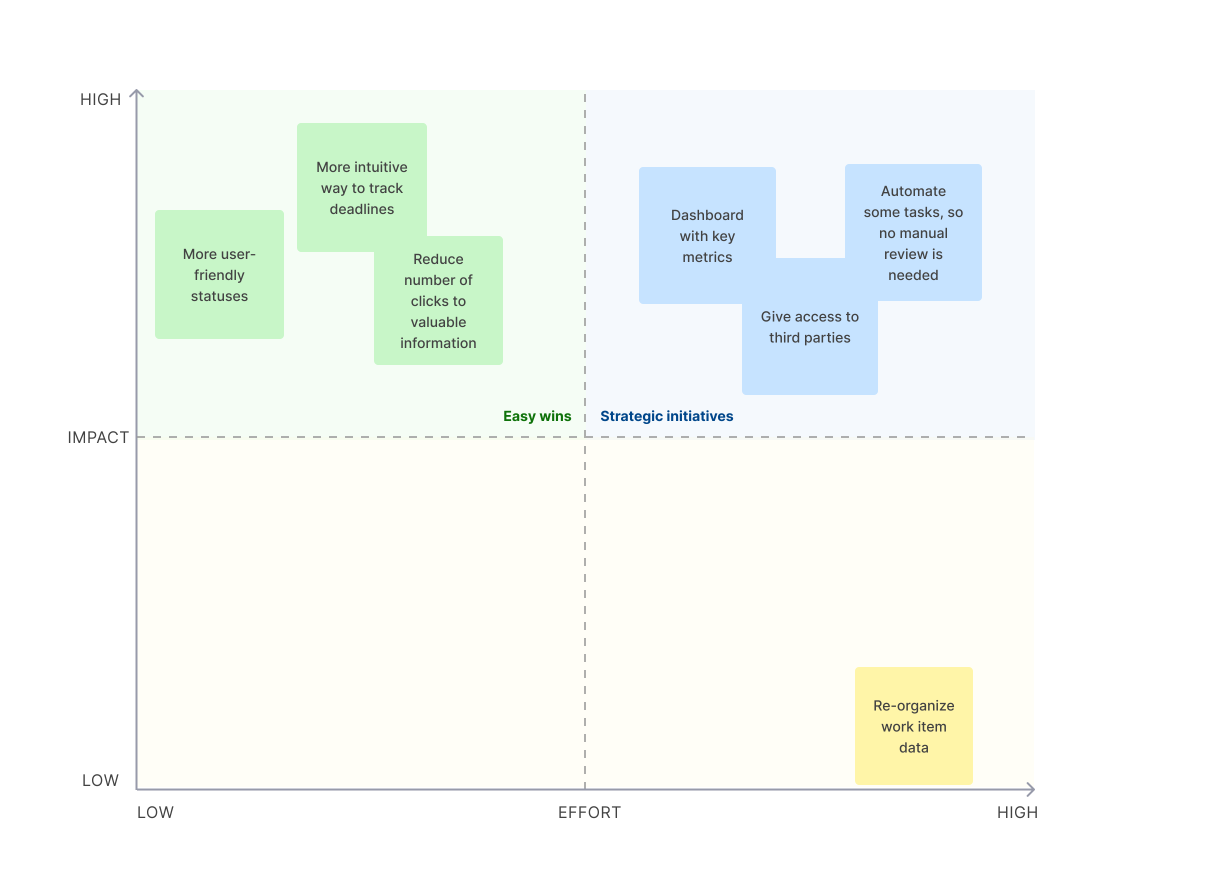
Snapshot of 2x2 matrix, mapping impact and effort to help clients prioritize features.
Handoff and impact
To close out the project, I presented the strategic initiatives and easy wins to senior and executive leadership, demonstrating how a combination of incremental improvements and deeper rebuilds could advance the system without disrupting users. I also facilitated a workshop that enabled the leadership team to align on a clear product vision and prioritize the path forward, giving them confidence in their decisions and a structured plan for execution.
Not only did the discovery project lead to a clear roadmap, but it also gave the team and stakeholders confidence in their decisions, created shared understanding across internal and external users, and clarified why they were rebuilding in the first place.
To close out the project, I presented the strategic initiatives and easy wins to senior and executive leadership, demonstrating how a combination of incremental improvements and deeper rebuilds could advance the system without disrupting users. I also facilitated a workshop that enabled the leadership team to align on a clear product vision and prioritize the path forward, giving them confidence in their decisions and a structured plan for execution.
Not only did the discovery project lead to a clear roadmap, but it also gave the team and stakeholders confidence in their decisions, created shared understanding across internal and external users, and clarified why they were rebuilding in the first place.
CLIENT QUOTE
"The research Youjin led underscored both her mastery of her craft and the value she's brought to this effort."
"The research Youjin led underscored both her mastery of her craft and the value she's brought to this effort."
Success Metrics
Reduced time and effort per work item
Fewer support calls and off-system communication
Faster onboarding for new users
Improved accuracy of submitted data
Design Principles
Simple: reduce unnecessary complexity
Data-driven: help users understand status without asking
Smart: prevent errors before they become work items
References
Illustrations from Blush
Persona Illustrations from Pablo Stanley's Open Peeps