Shaping pricing decisions
Applying information architecture to reduce cognitive load and support confident decisions
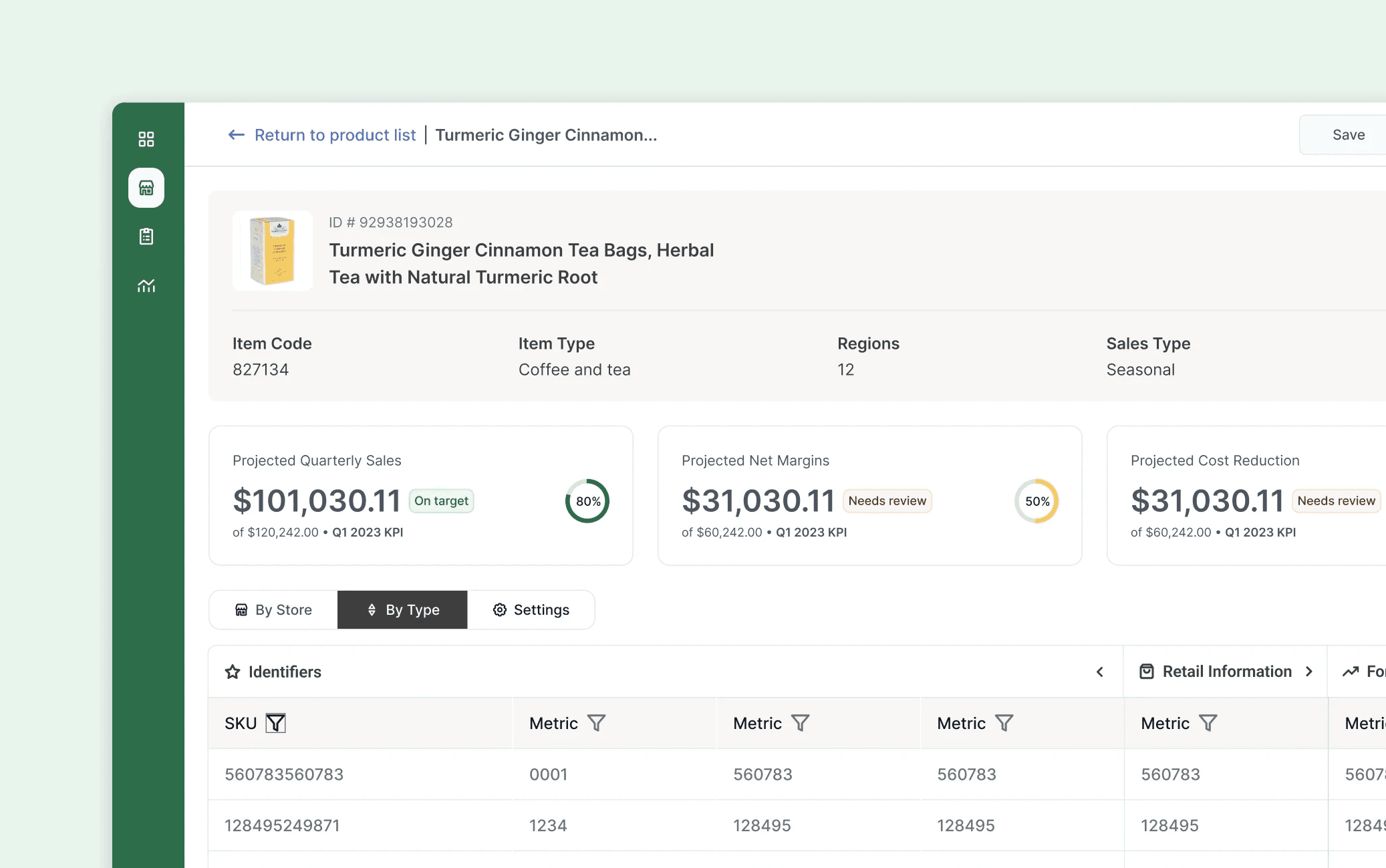
Overview
INDUSTRY
Grocery retail
ROLE
Product designer
SKILLS
UX Research
Information Architecture
YEAR
2023

Initial research
USER GOAL
Confidently make data-driven pricing decisions to support their department's financial objectives
Problem framing
PROBLEM STATEMENT
How might we create a flexible experience for users across multiple departments that minimizes cognitive load and speeds up their current data review process?
Information architecture
RESEARCH QUESTION
How do each of the datapoints inform and influence the decisions made by analysts?
HIERARCHY PRINCIPLES
Surface critical information at a glance for fast, confident decisions
De-emphasize secondary data by increasing access effort to preserve focus
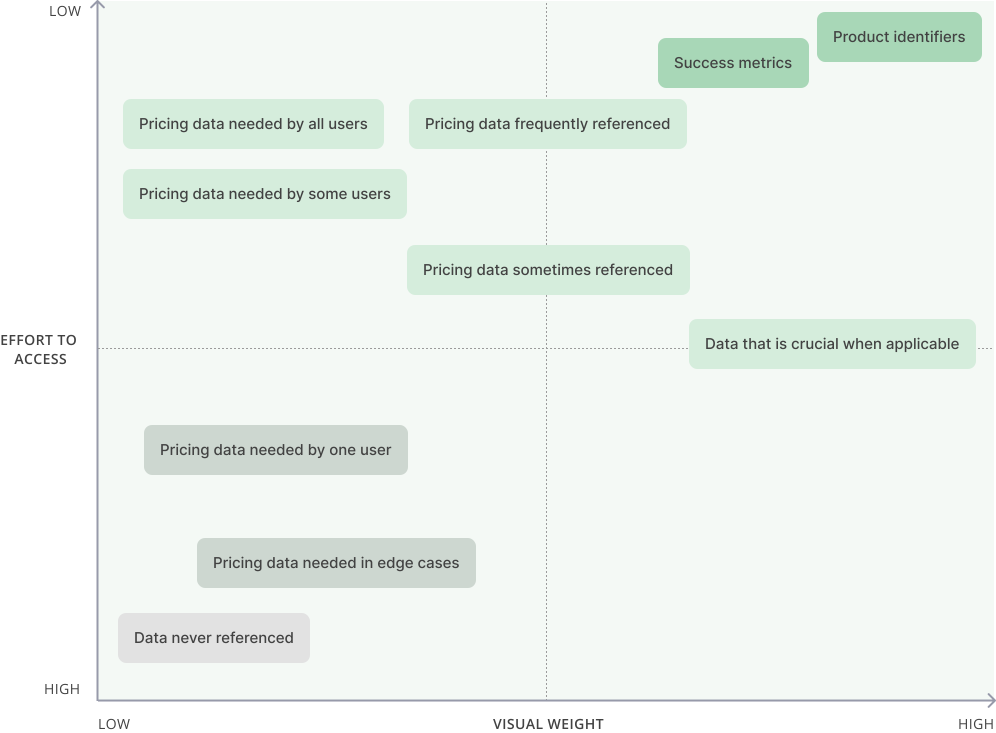
Product identifiers and success metrics were crucial and a typical starting point for an analyst's task so they had the highest priority in terms of access and visual weight.
Even data points that were "never" referenced had to be accounted for in case it was needed in the future or by a user with unique needs. However, it would require multiple clicks to access.
The pricing data was a bit more complex. The decisions made about the organization of this data were informed by a mix of how often it was needed, its need across user types, and how crucial it was to decisions.
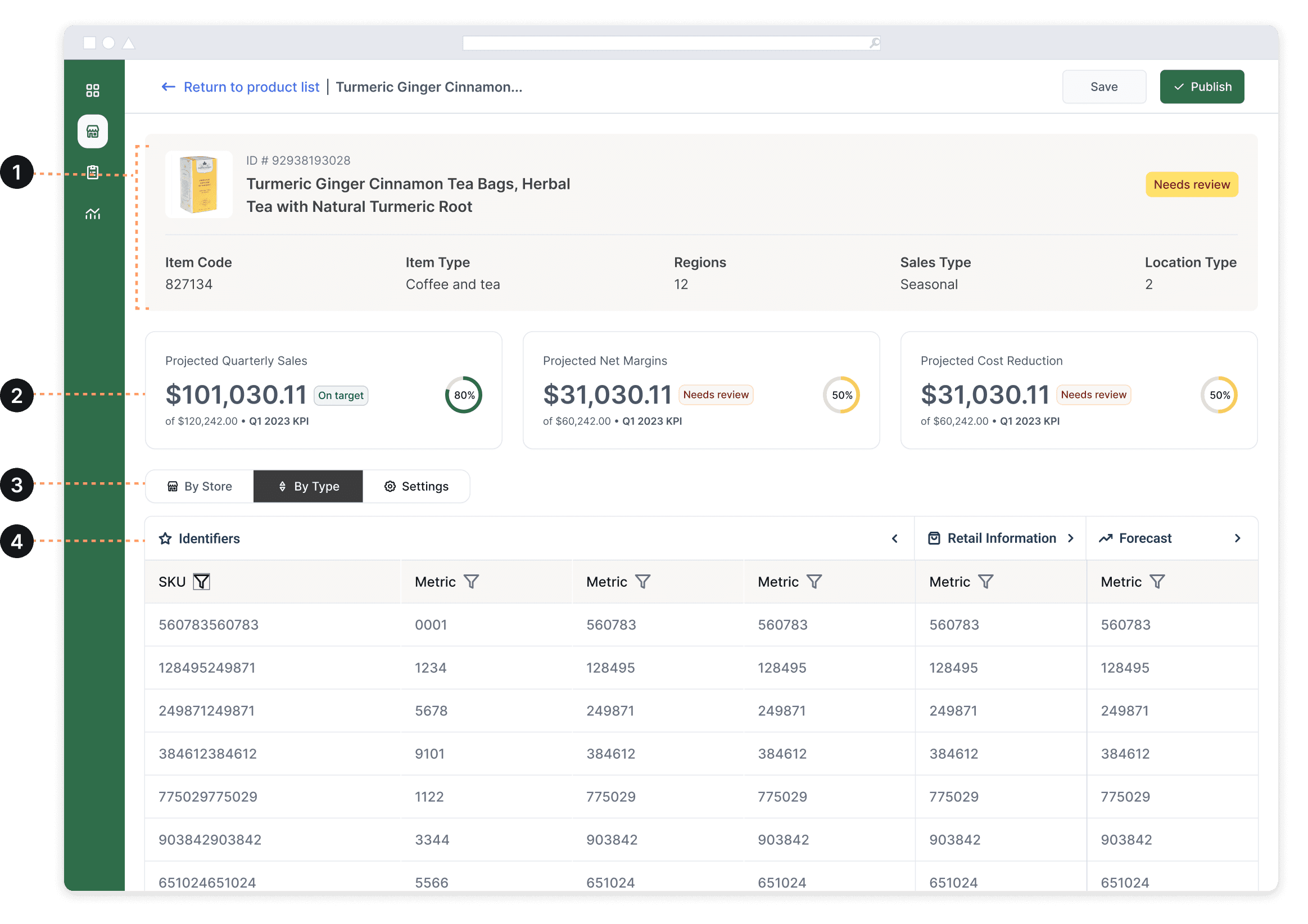
Wireframes
References
Illustrations from Blush