Navigating ambiguity with AI
Product strategy and design to improve conversion and inspire confidence
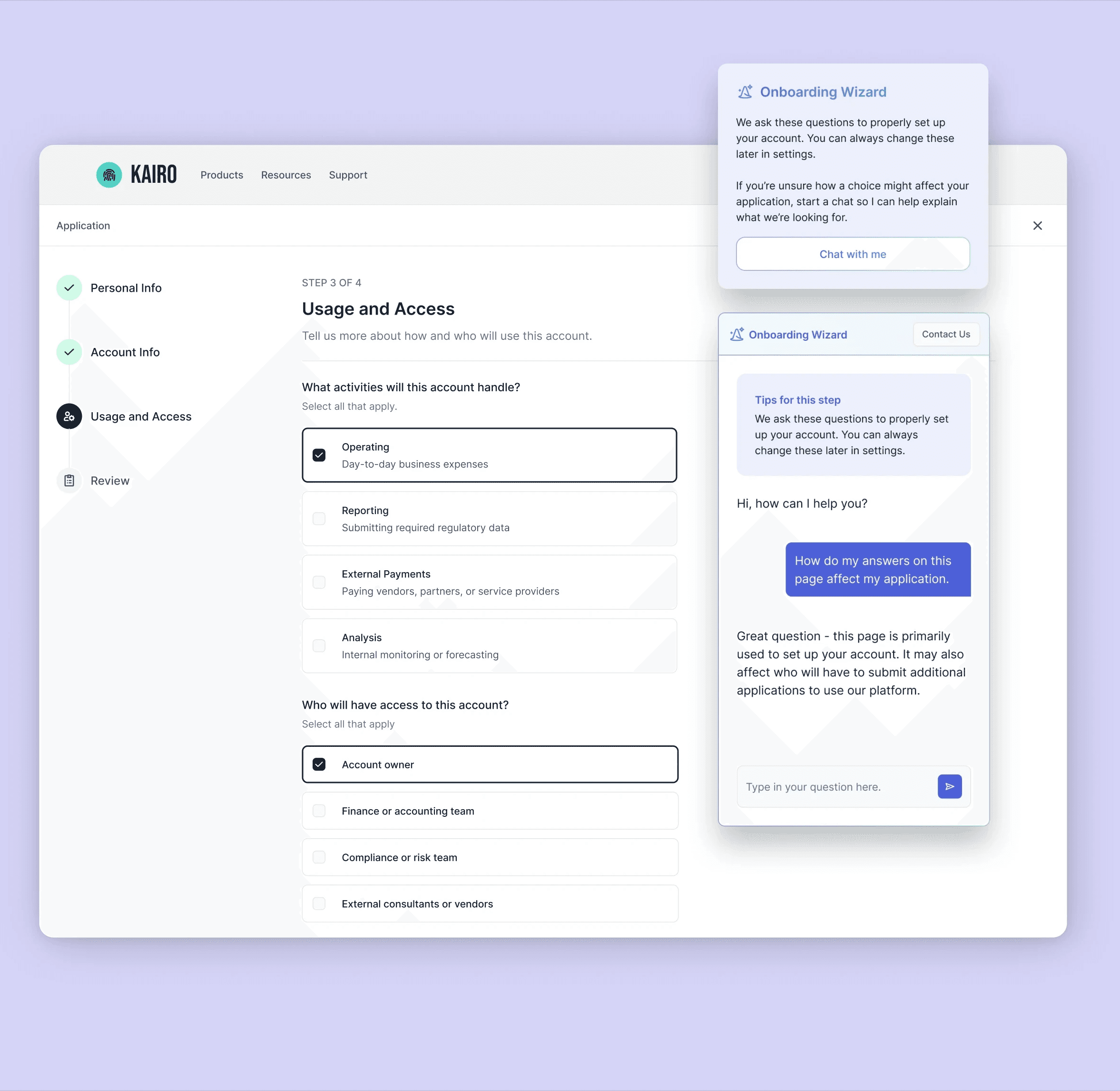
Overview
ROLE
Product designer
YEAR
2025
Challenge
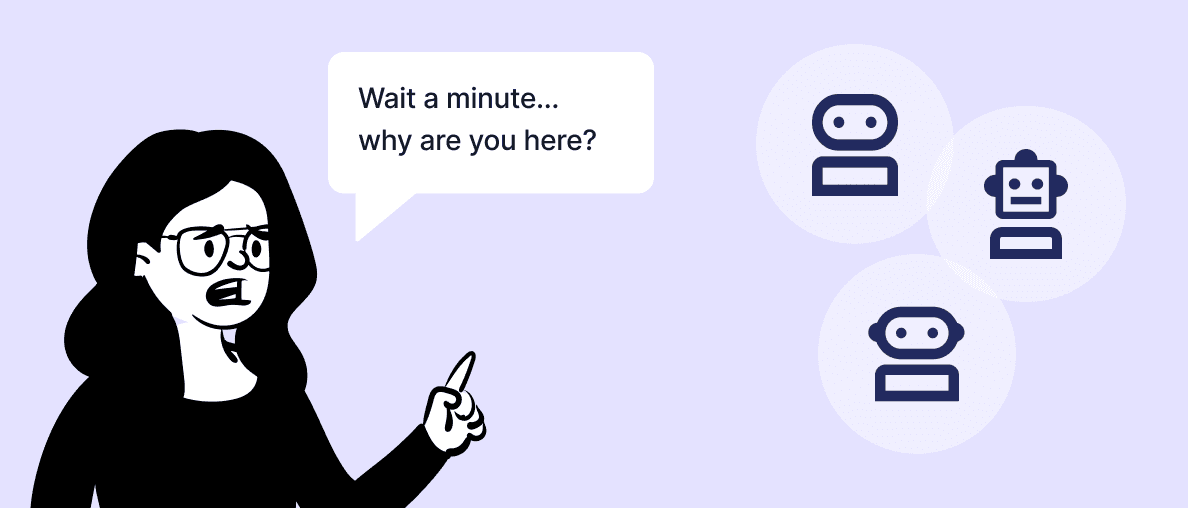
As AI took the tech space by storm, AI chatbots quickly became one of the most common implementations in enterprise software. Inevitably, I was asked to design an AI chatbot experience as part of an onboarding flow.
As a designer, it felt like we were working backwards. Why are we starting with the solution? What problem were we actually solving? In order to ground the initiative in the problem space, I treated it as a hypothesis and asked the following key questions:
Could the AI assistant solve a problem in the experience at all? If so, what is it?
What unique value can an AI assistant provide that traditional software or human support cannot?
The competitive landscape
I examined the broader AI and enterprise SaaS landscape and identified a few patterns:
Nearly every website and platform had implemented a chatbot and many chatbots just added noise
Stronger implementations extended existing systems and workflows, using AI to make complex actions more intuitive.
With these insights in mind, it was imperative to me that we designed an experience based on user problems and business values, rather than slapping another chat window in the corner of a screen.
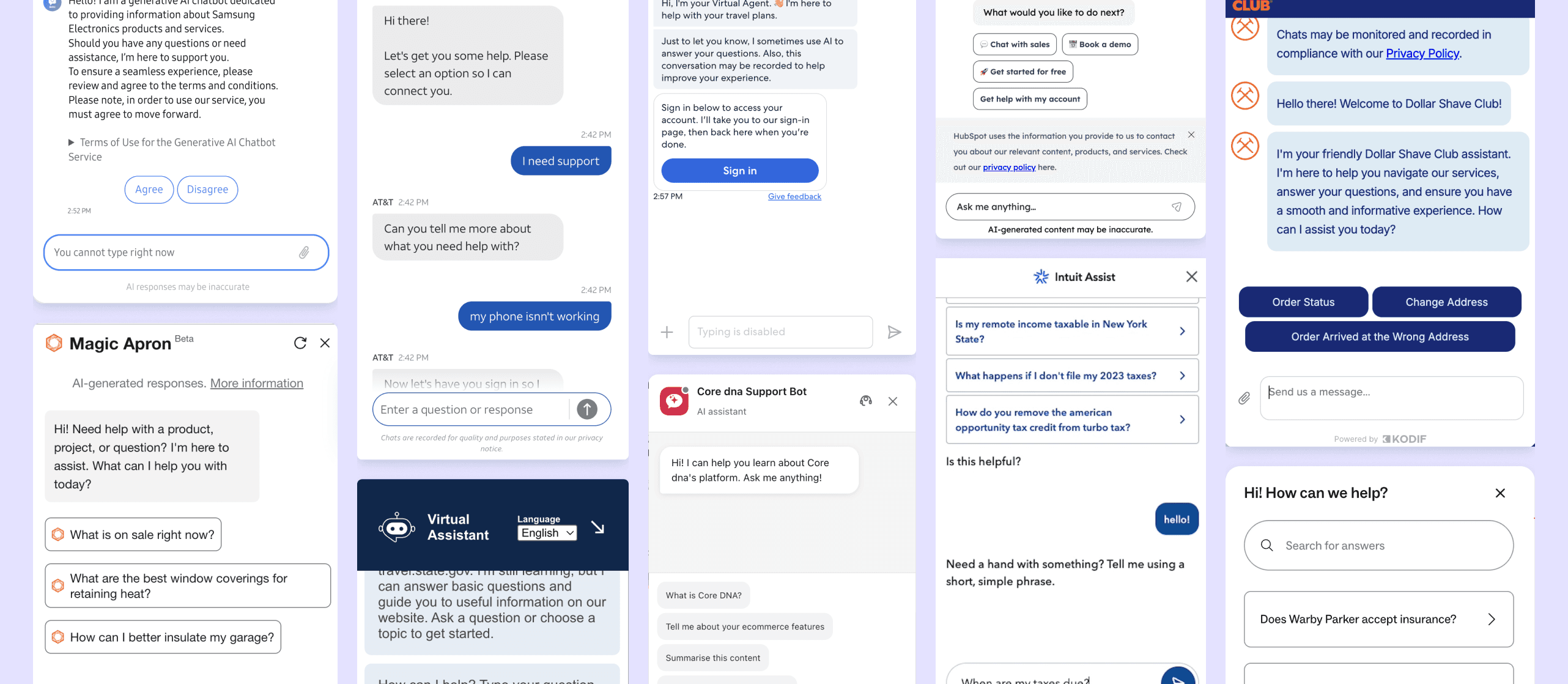
There are a lot of chatbots out there…
The opportunity space
With that context, I examined the product’s onboarding experience more closely and uncovered a problem space that would benefit from AI’s strengths.
The platform operated in a highly regulated industry and every customer had to fill out an onboarding application for approval, which had ambiguous questions to reduce risk and prevent misuse.
Customer conversion during onboarding was critical to the platform’s success, but moments of friction made onboarding fragile and prone to abandonment.
The process had to be secure and compliant while avoiding user frustration. The team worked closely with subject matter experts to understand constraints and requirements, many of which raised user experience concerns.
We wanted to optimize customer conversion but were fighting with rigid requirements that were necessary for compliance. It turned out that AI was, in fact, the answer to our problem.
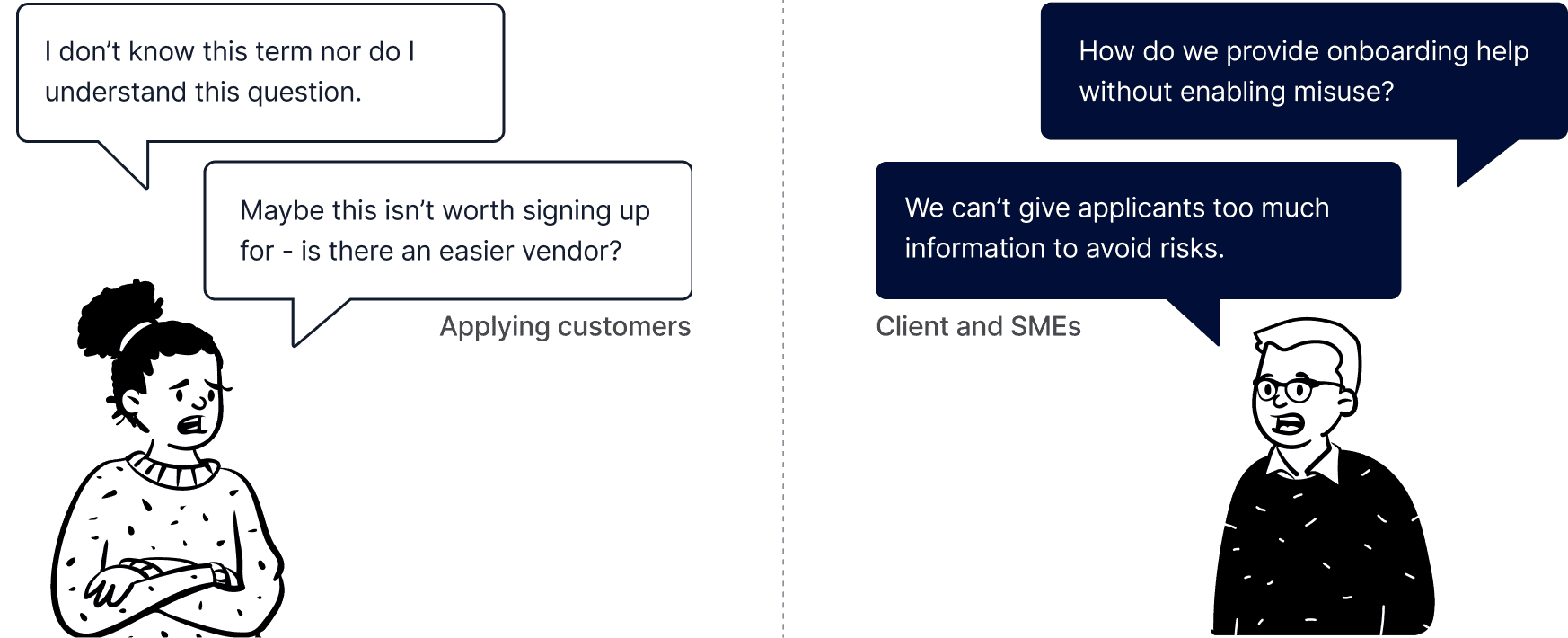
This pointed to a unique niche for AI’s strengths. It could reduce uncertainty and increase confidence throughout onboarding. The assistant could:
Respond to specific, user-initiated questions
Provide factual information and links to trusted resources
Offer support while respecting regulatory boundaries
Designing the experience
Since I can’t reveal specifics about features or decisions, I’ll outline two key areas that shaped the experience:
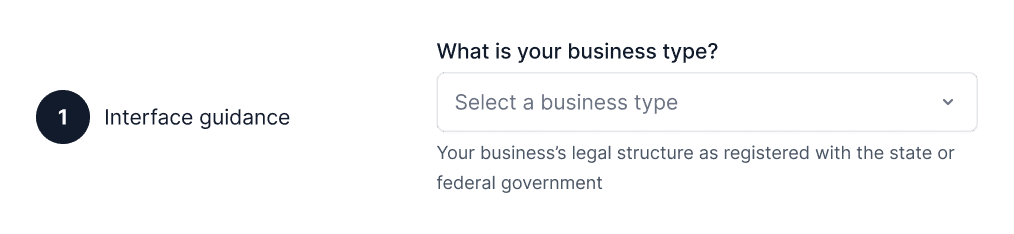
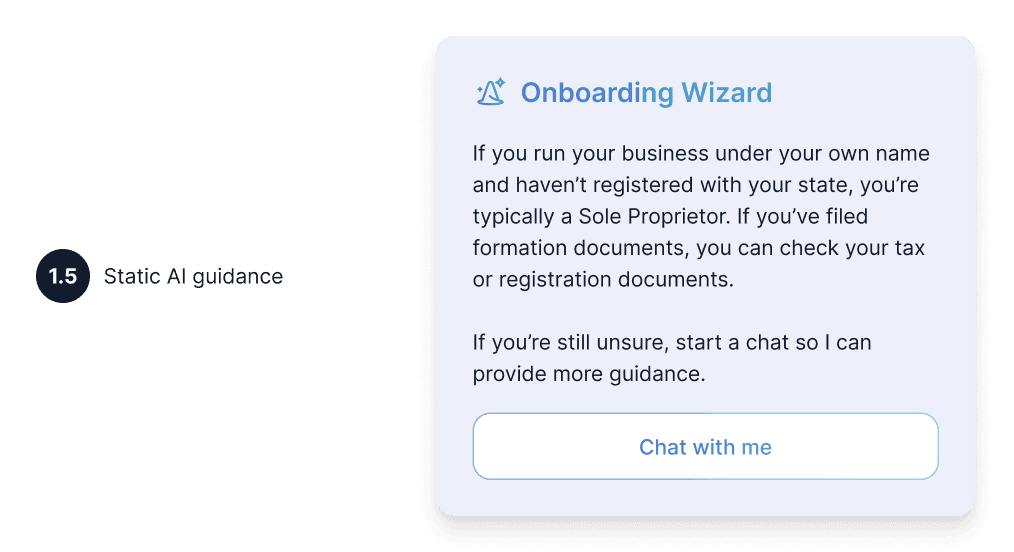
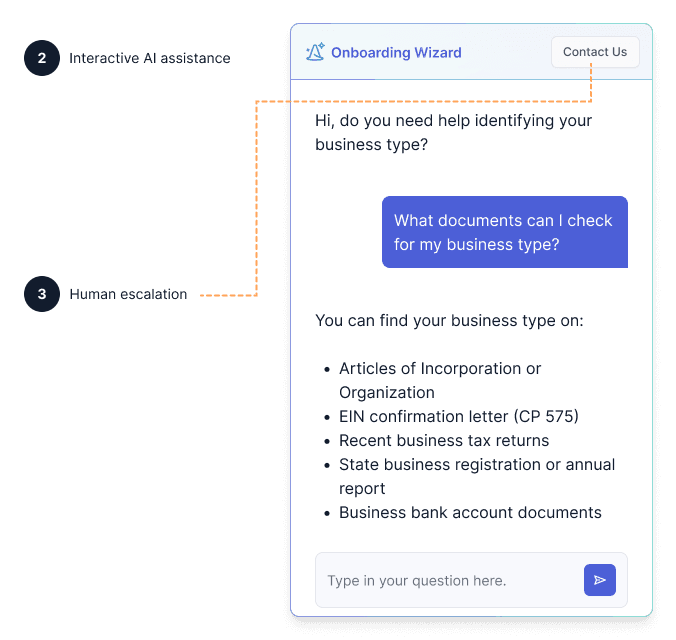
The main opportunity in the onboarding experience centered around providing relevant guidance to the customer. The onboarding experience presented an opportunity to provide guidance in escalating levels of complexity:
Level 1: Basic interface guidance (help text, validations, error states)
Level 2: Interactive AI assistance
Level 3: Escalation to human support for system-level issues
To balance relevance and discoverability, we added a “Level 1.5”: a discreet UI snippet providing concise AI-generated guidance, which could point users to the assistant for deeper clarification.
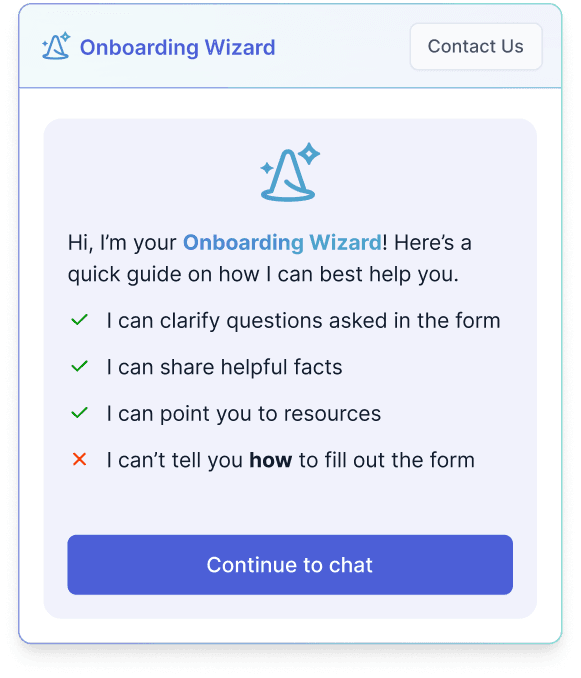
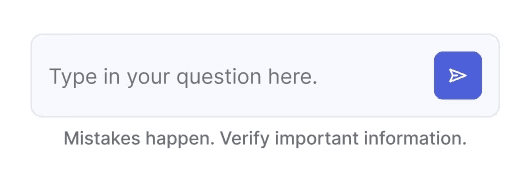
Because the assistant operated under clear constraints, trust was a core design concern. The AI was not positioned as an all-knowing authority. Instead, it:
Clearly communicated what it could and could not do
Encouraged users to review and verify their inputs
Provided boundaries on appropriate use
Studies have shown that setting these expectations increased confidence and trust in the AI assistant for users.
Impact and reflection
Since the product hasn’t launched, we haven’t been able to test our onboarding process with the enhanced AI assistant. However, we are hoping for the following outcomes as a test of our initial hypothesis:
Decreased calls to support teams
Increased conversion rates of customers
Because our customers were not domain experts, the onboarding process may have been intimidating and frustrating and an AI assistant enabled customers to ask questions that they might have felt embarrassed asking a fellow human.
Although I went into the AI feature skeptical, I was pleasantly surprised at how it solved a real user and business problem.
References
Illustrations from Persona Illustrations from Pablo Stanley's Open Peeps